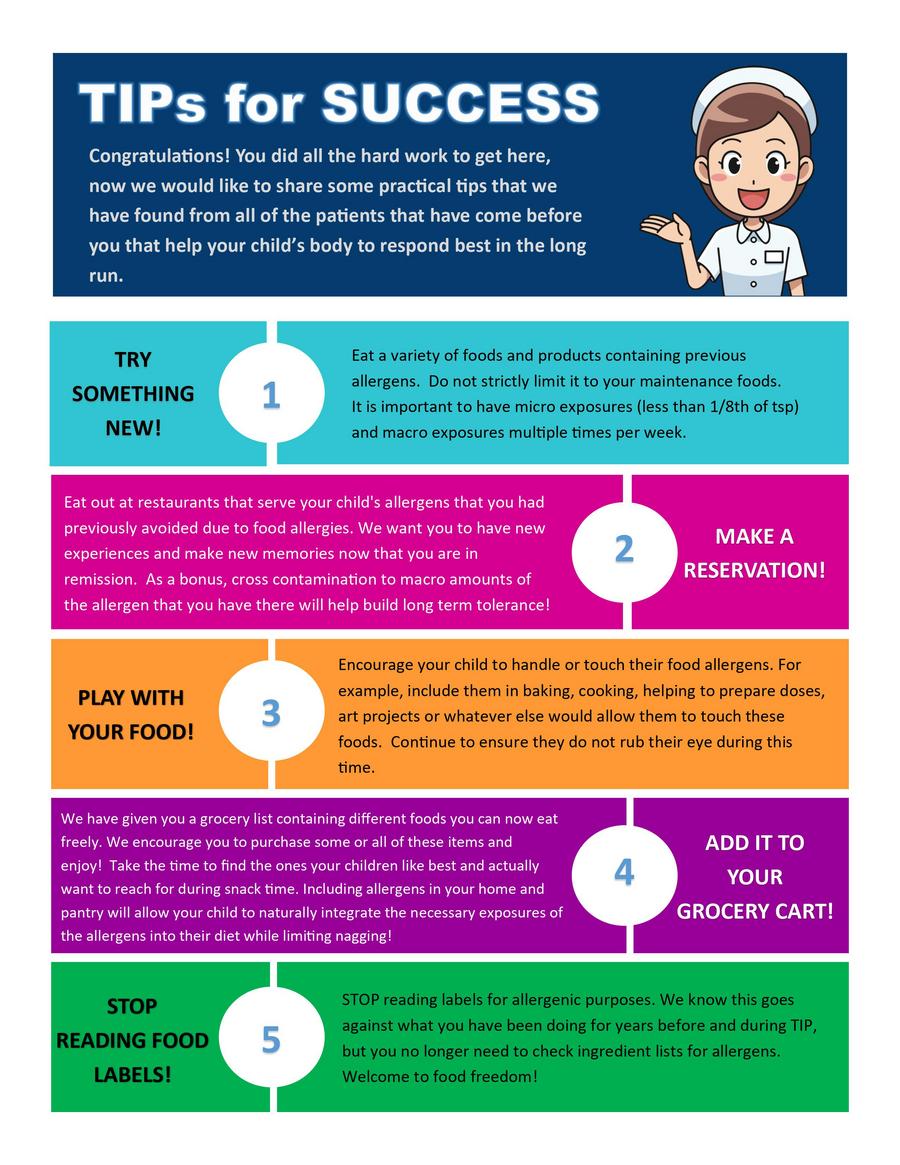
Congratulations! You did the hard work to get here, now we would like to share some practical tips from our providers to help your child's body respond best in the long run.
Reaching remission demonstrates tolerance to all treated allergens and the disease state of anaphylaxis is moving into a remission state. This treatment is remission, not a cure, and needs continued maintenance treatment. The goal moving forward is sustained unresponsiveness to the allergens. The patient must have continued annual follow-ups to ensure they are compliant with treatment and the maintenance plan is continuing to drive their system into a further state of tolerance as the patient continues to grow and develop. The deeper the state of tolerance that develops over time, in years, the less maintenance they will require generally such as once every two weeks or once every month.
Maintenance Foods:
Initially in remission, most maintenance foods are moved to a weekly basis. It is very important that the patient continues to consume their weekly maintenance foods to ensure their body is continuously being exposed to the proteins. Our patients that do best in remission find ways to enjoy maintenance foods beyond just their weekly dose by integrating them into snacks and meals throughout the week. See our TIPs for Success graphic below for other ways to be successful in remission.
Keep In Touch
Scenario Kits:
Patients can now condense their scenario medications to only carrying Benadryl and an Epi-pen with them and stocking scenario 3 medications at home. Patients and families are still able to use Food Allergy Institute resources such as TipHelp by emailing tiphelp@tpirc.org for any questions they have.
Annual Remission:
When returning for annual remission appointments your child will have two visits, a testing day, and an Annual Remission Visit with a physician. During the testing appointment, your child will complete a pulmonary function test/exhaled nitric oxide test if over 7 years old, a skin prick test, and a blood draw. This testing will be compared to testing your child completed throughout the program. During the Annual Remission Visit a physician will discuss the results of your child’s testing, this will also be where you can ask any questions you may have.
Out Of Pocket Cost Estimates for Annual Remission Testing: